UI / UX Design
MyGov: UX Redesign Project
"An end-to-end UX overhaul of the MyGov website, focusing on inclusive UI patterns and seamless user journeys to increase transparency and participation in digital democracy."
Year :
2024
Industry :
Governance
Client :
College project
Project Duration :
3 months
OVERVIEW :
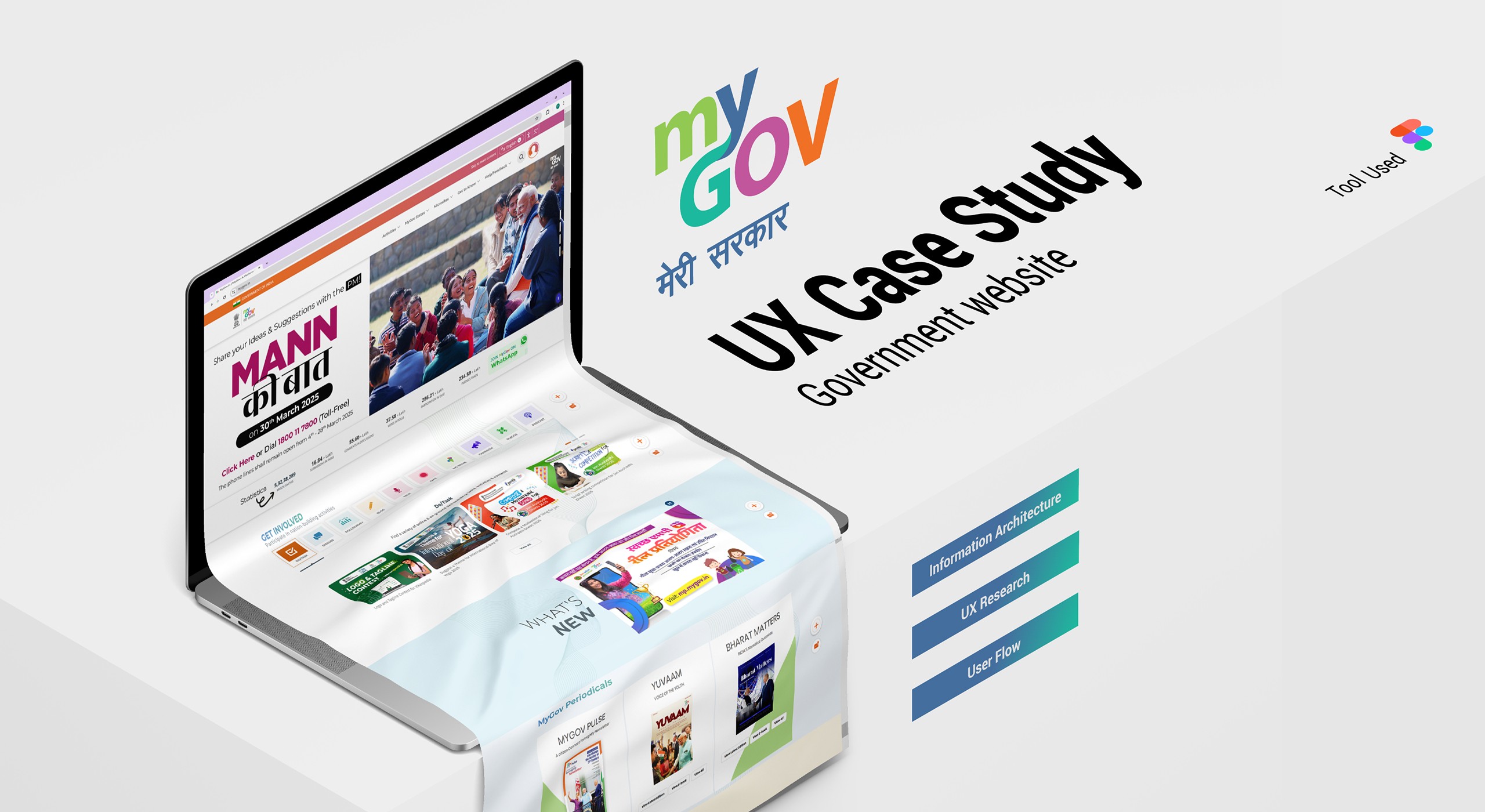
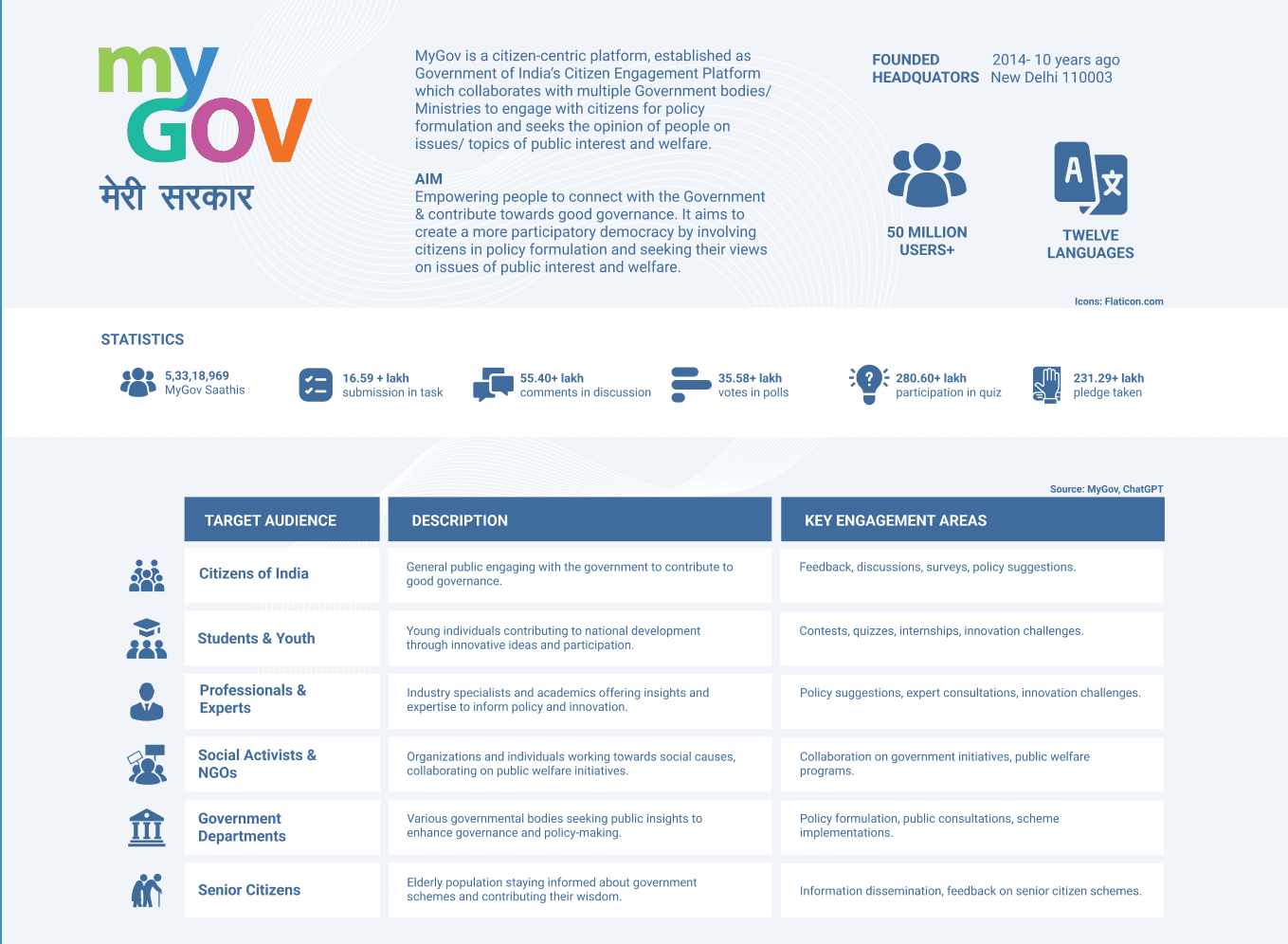
MyGov is a citizen-centric platform, established as Government of India’s Citizen Engagement Platform which collaborates with multiple Government bodies/ Ministries to engage with citizens for policy formulation and seeks the opinion of people on issues/ topics of public interest and welfare.
Empowering people to connect with the Government & contribute towards good governance. It aims to create a more participatory democracy by involving citizens in policy formulation and seeking their views on issues of public interest and welfare.
THE CORE CHALLENGE :
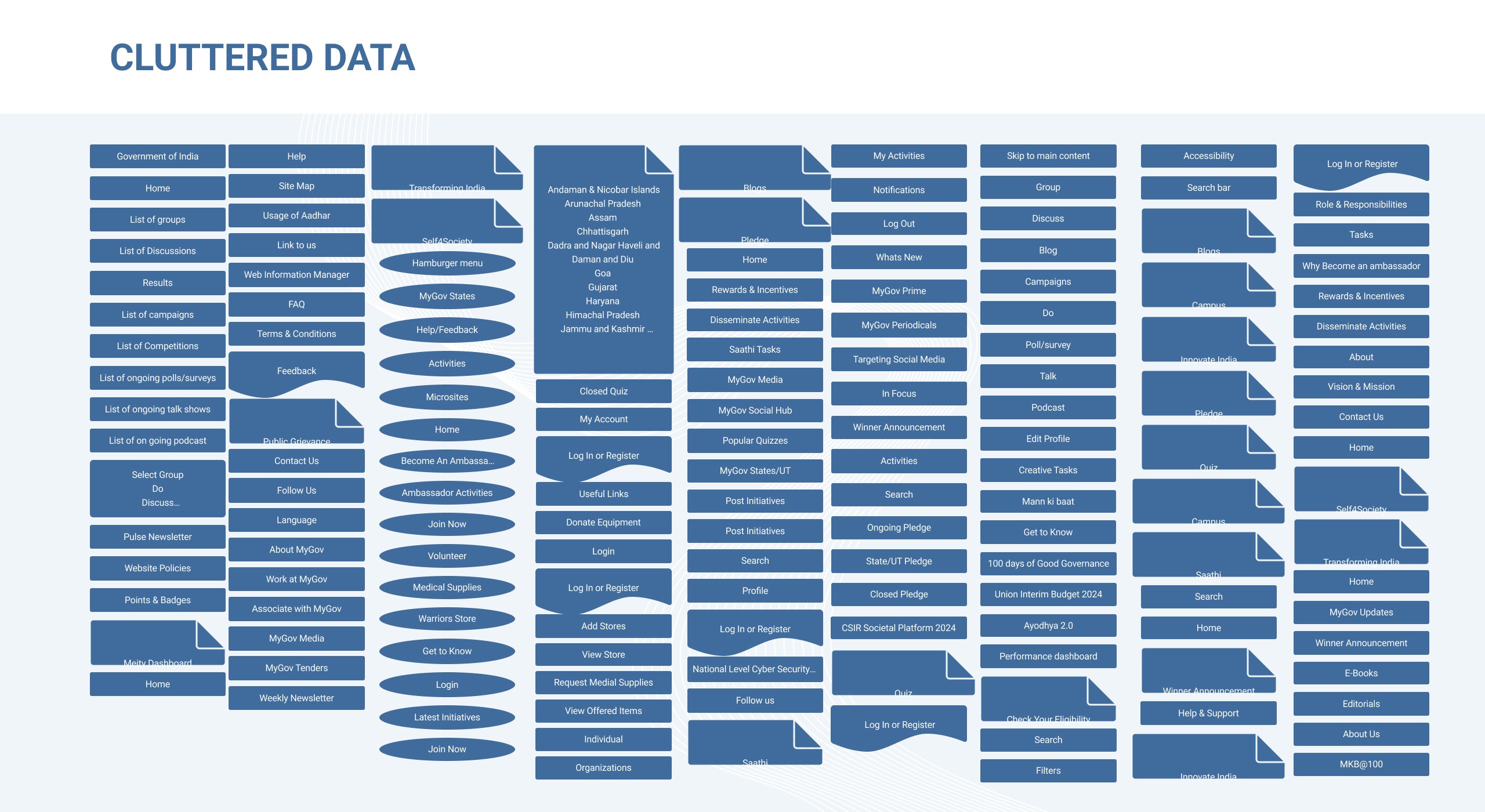
The existing platform suffered from Cluttered Data, where the sheer volume of information created a high cognitive load for users. The challenge was not just visual; it was a matter of Complex Navigation that made essential tasks—like providing feedback on a policy—inefficient and difficult to complete.
UX Research & Strategy :
To rebuild the site’s skeleton, the research focused on how information is perceived and categorized.
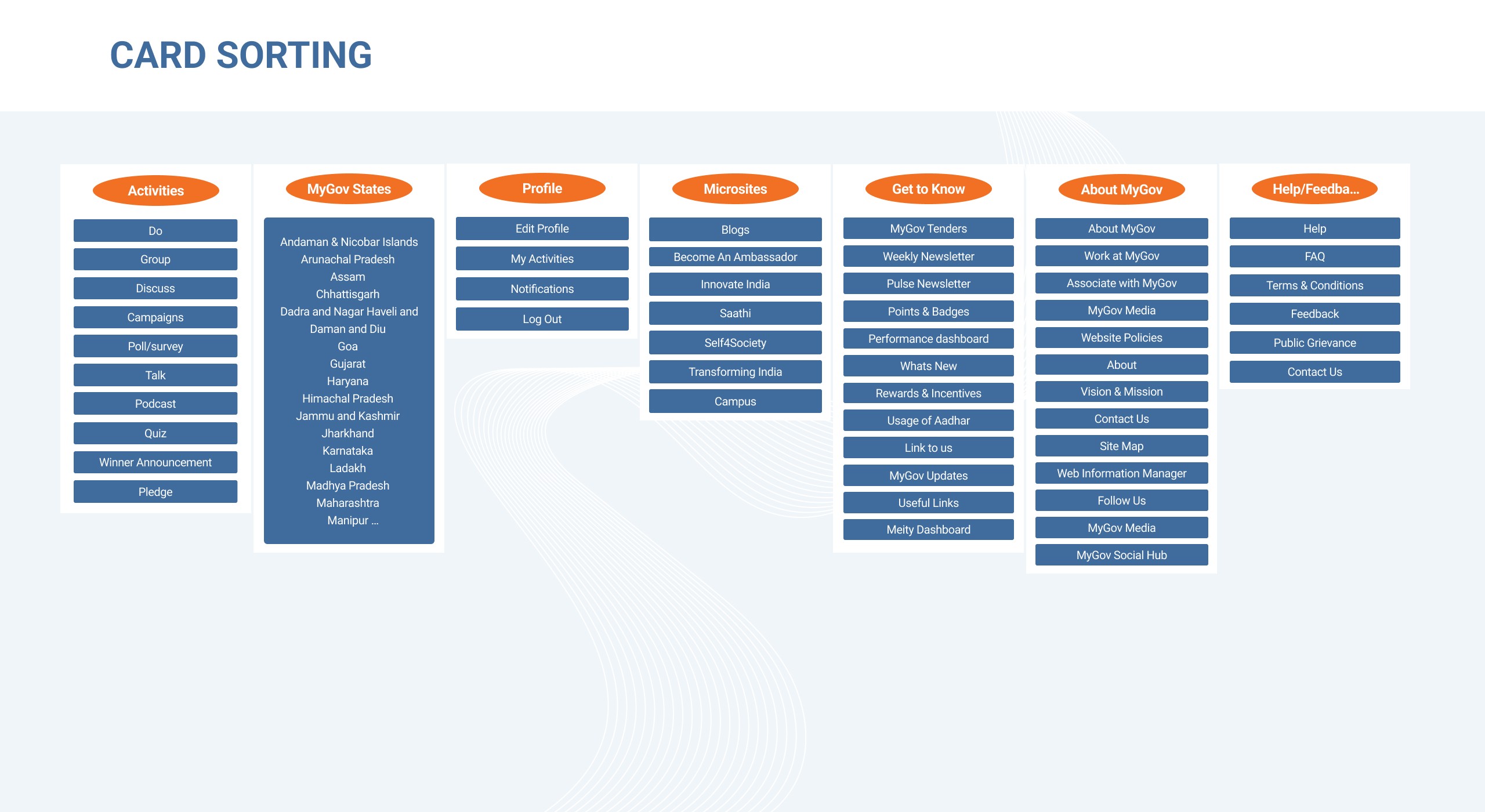
Card Sorting: This was the foundational step used to categorize high volumes of data into intuitive clusters.
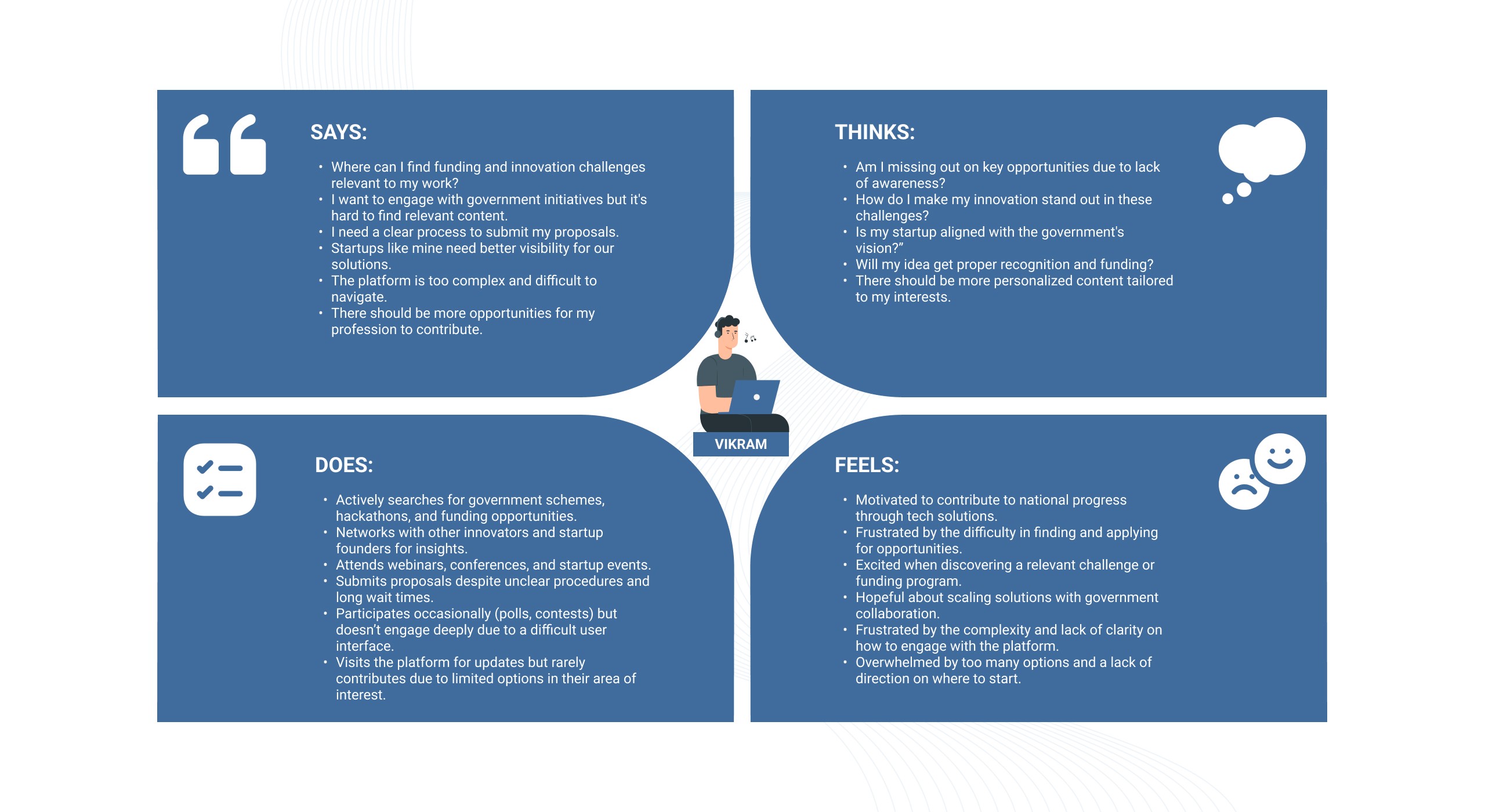
Empathy Mapping: Used to identify where users felt "lost" in the current hierarchy.
Comparative Analysis: Benchmarking the hierarchy against global digital governance standards to ensure best-in-class findability
THE IA SOLUTION :
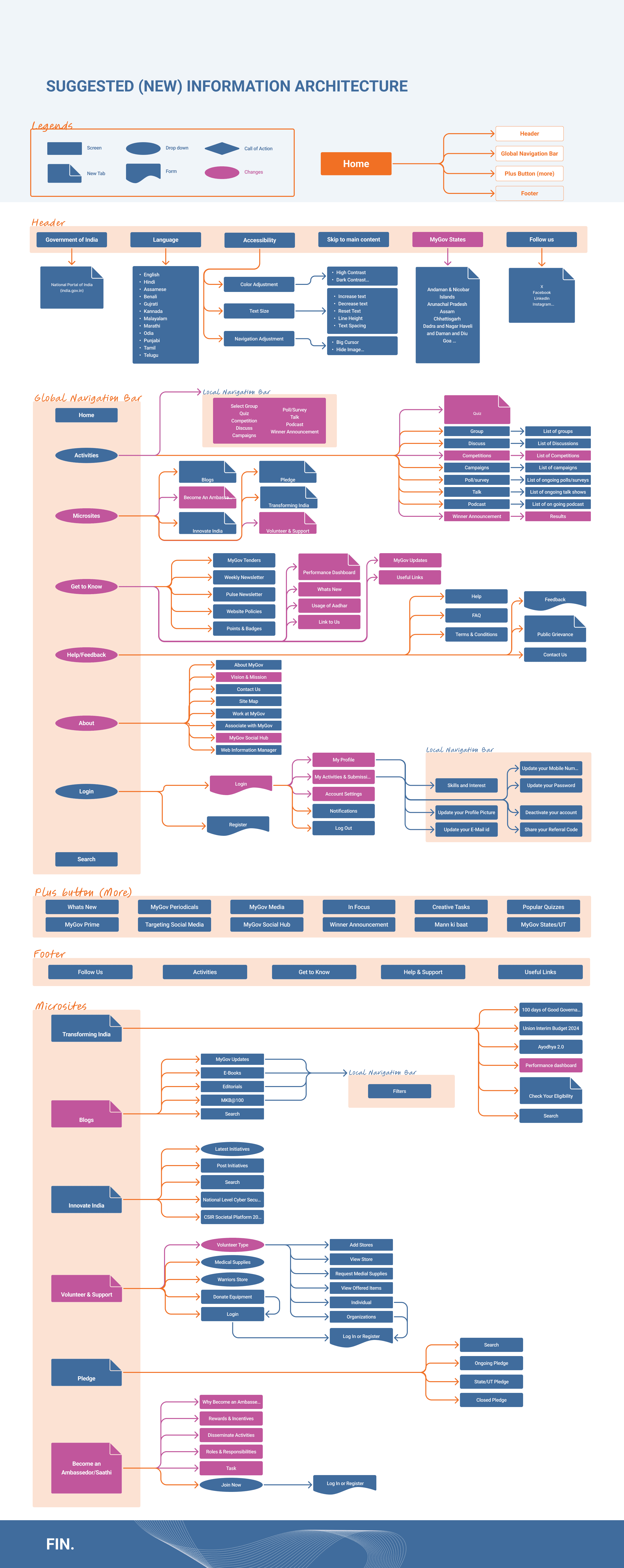
The solution centered on a complete overhaul of the Information Architecture (IA).
Suggested (New) IA: Transitioned from a "data-first" approach to a "task-based" navigation system.
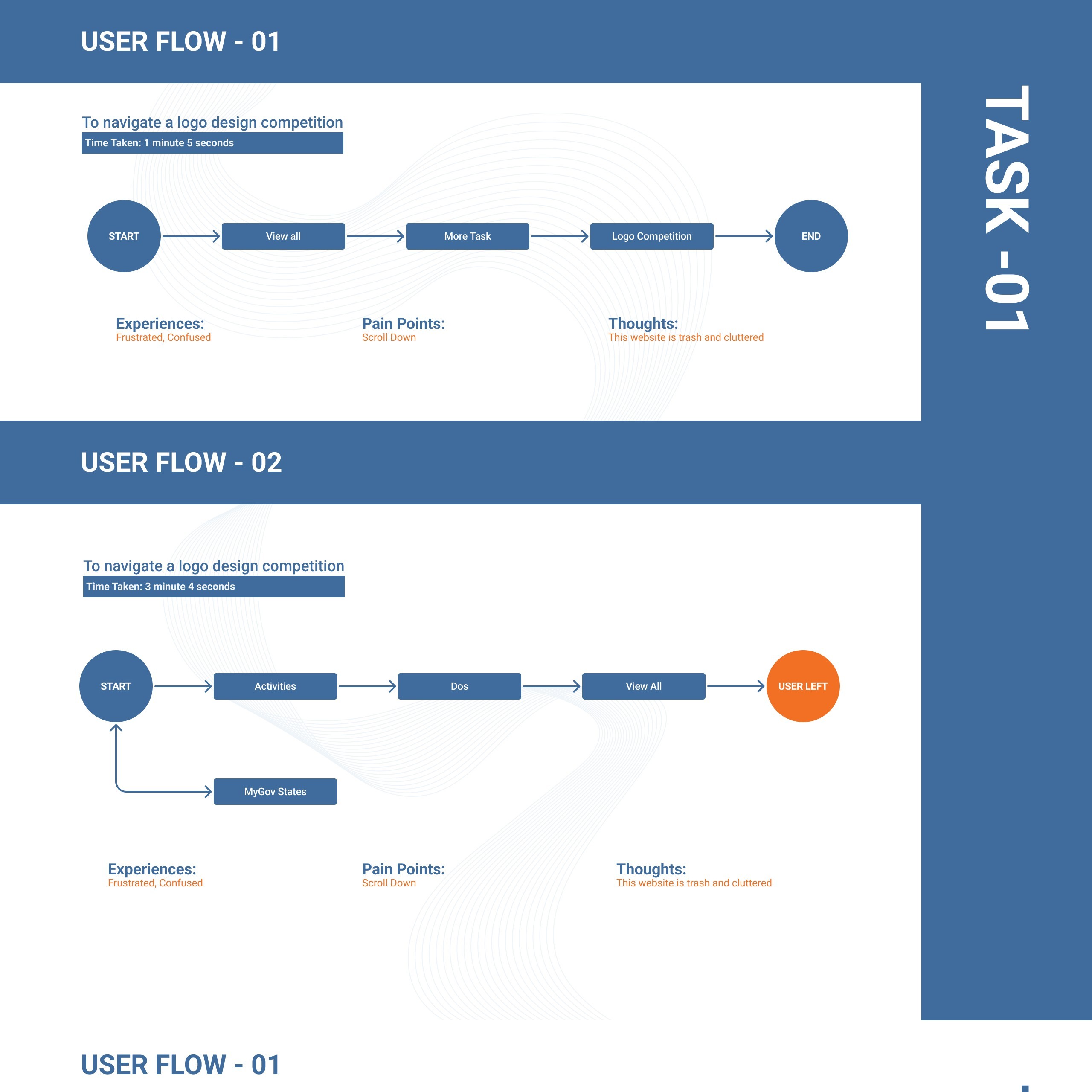
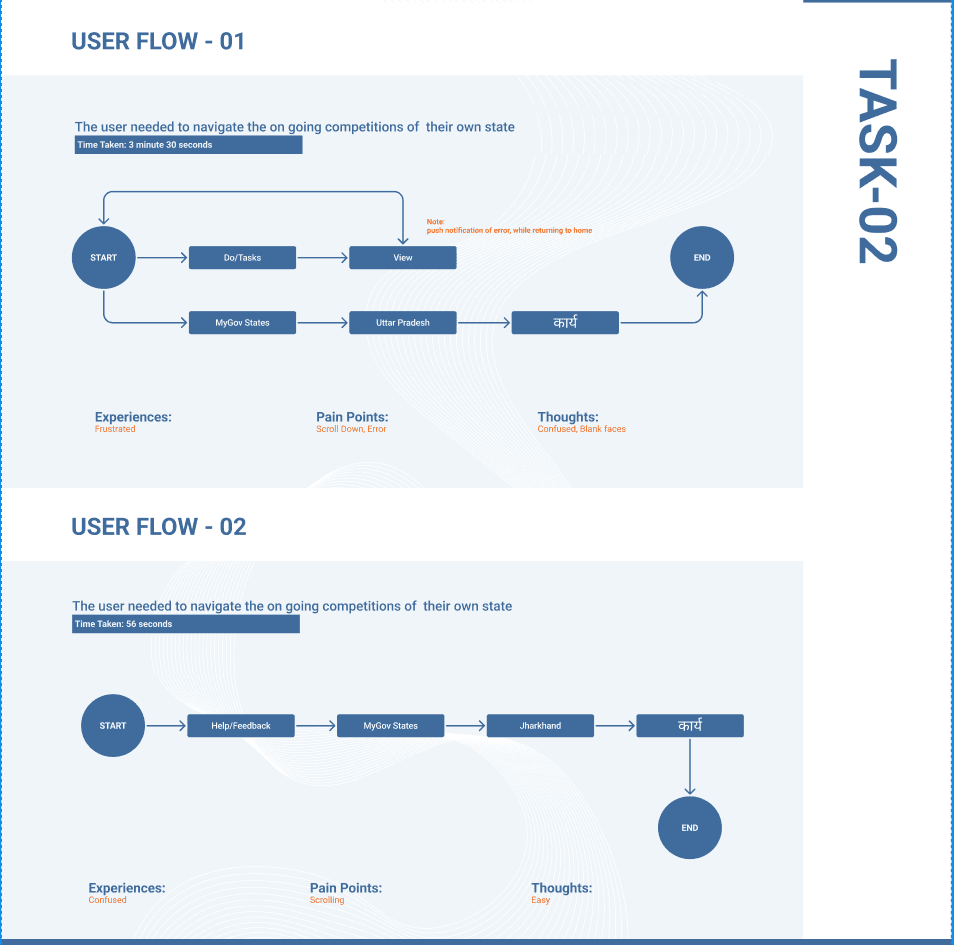
Task-Oriented Paths: Developed specific sequences (Task-01 through Task-04) that guide users directly to their destination without distractions.
Accessibility: Ensured the hierarchy remains logical and inclusive for users with varying levels of technical proficiency.
Optimized User Flows :
New flows were mapped to ensure seamless transitions between different sections of the platform:
User Flow 01: Streamlined the primary journey for citizen engagement, ensuring the path from discovery to participation is frictionless.
User Flow 02: Optimized the policy contribution path, making it easier for citizens to offer opinions on public welfare issues
Summary and Impact
By restructuring the Information Architecture, the project successfully reduced the friction between the government and its citizens. This transition from a cluttered repository to an organized, task-led environment ensures that digital democracy is accessible, intuitive, and efficient for all.